A clear next step on every open case
- Role
- Product Designer
- Solo project
- Timeline
- August 2026
- Research & concept
- Type
- Web app
- Case management
- Focus
- Workflow design
- Public health
Overview
Disease investigators at local health departments reach people with reportable diseases fast enough to limit spread. Their official record can’t tell them what to do next. The goal was a web app that sits on top of the state system and makes the next step on every open case explicit.
TL;DR
- The problem
- The official record says what’s known about a case, not what to do next. Next steps, owners, and waits live in spreadsheets and memory, so urgent cases get buried.
- What I did
- Interviewed 7 investigators at 2 health departments, then designed a web app that sits on top of the state system, prototyped end to end.
- The outcome
- A working prototype where every open case has a next action, an owner, and a due date. Not yet tested; five task-based sessions are next.
The current experience
Before the first case of the day, an investigator checks six to nine places, from the state system to email, voicemail, and spreadsheets. None of them says what to do next.
Waiting looks like active
A case waiting on someone else sits in the same list as one due today, so it quietly ages.
Promises live in notes
“I’ll call you tomorrow” ends up in a personal list or a narrative note, not on the case.
Handoffs lose the owner
A case changes hands verbally, and it’s unclear who owns the next step.
So I went and talked to the investigators doing the work.
Research synthesis
“If I have to maintain my own second system, that’s a sign the main system isn’t doing what I need.”
Meet Morgan
A composite of the seven investigators interviewed. The goals, frustrations, and habits are drawn from real responses; the name and details are changed.


Morgan King
The Overloaded Tracker
- 36
- Disease investigator
- Harlan, KY
Bio
Works a steady stream of reportable disease cases and knows the state system well, along with the email, spreadsheets, and phone notes that fill its gaps. Trusts a dashboard only if it shows what needs doing next, and who has it, without opening every case.
Personality
Morgan
User journey map
Morgan’s day as it works now, across all those places. Each stage’s low point became an opportunity, and each one is answered by a key screen further down.
- Sweeps email, voicemail, the state system, a spreadsheet, and a calendar
- Checks for anything urgent that came in overnight
- Builds a mental list of the day
Routine, then uneasy. Morgan can’t confirm in one place that nothing was missed.
One morning view that answers “what needs me today?” so the sweep isn’t needed.
Wireframes
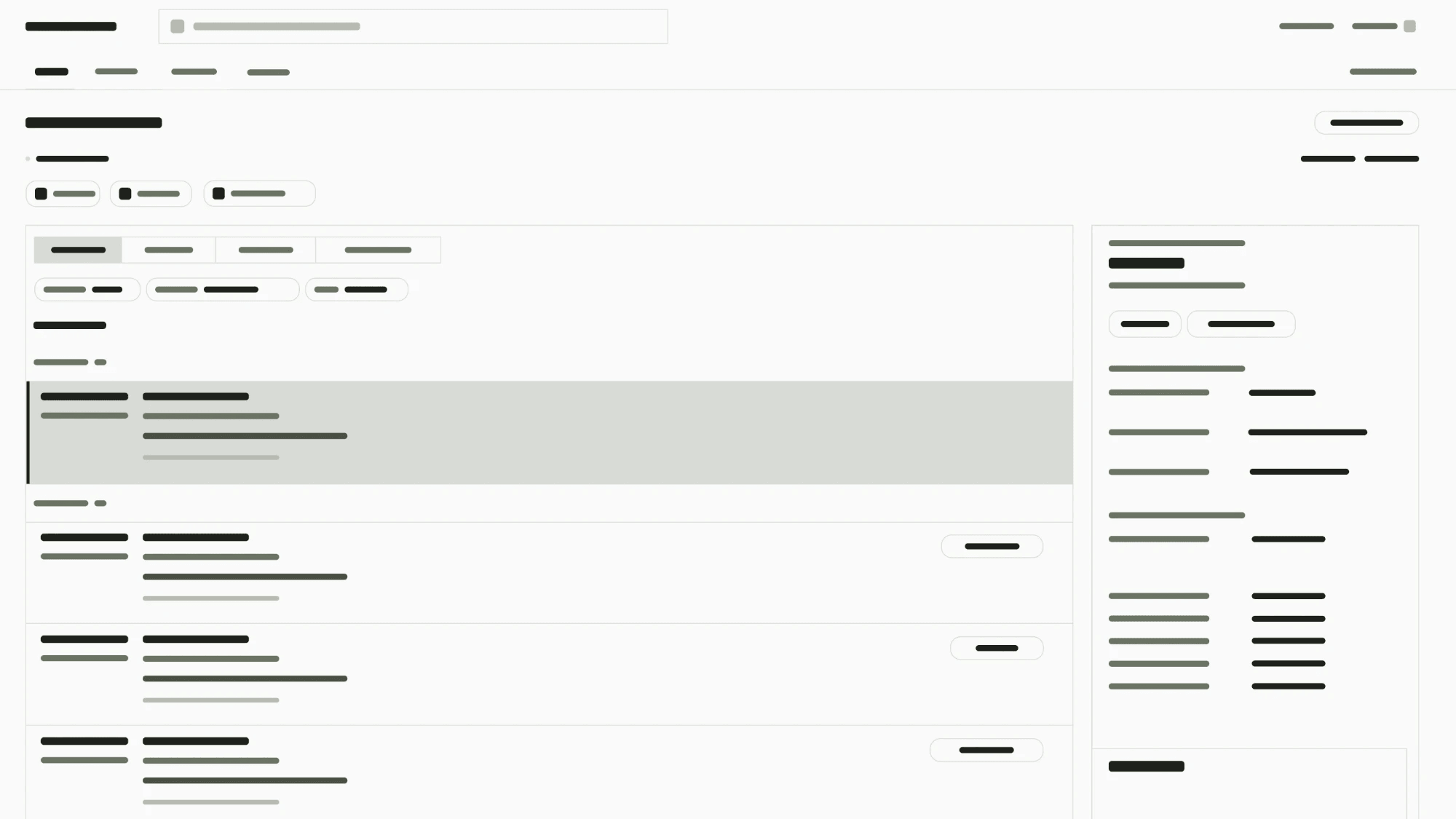
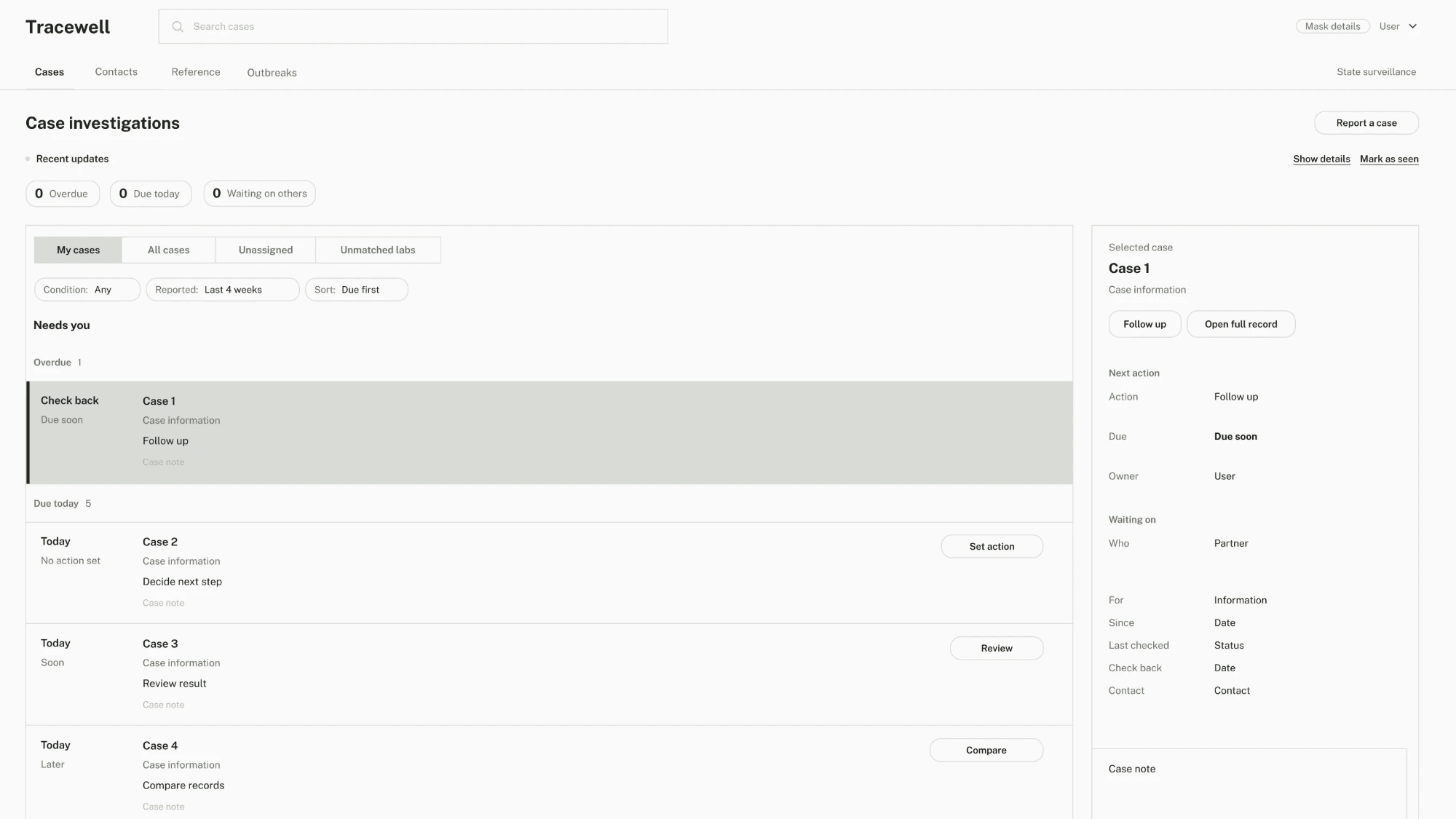
The case queue screen: the counts, the filters, the queue, and the selected case. Structure first, then the detail: switch between lo-fi and mid-fi to compare.
A web app built for clear next steps and clean handoffs.
What I built
Open full screen ↗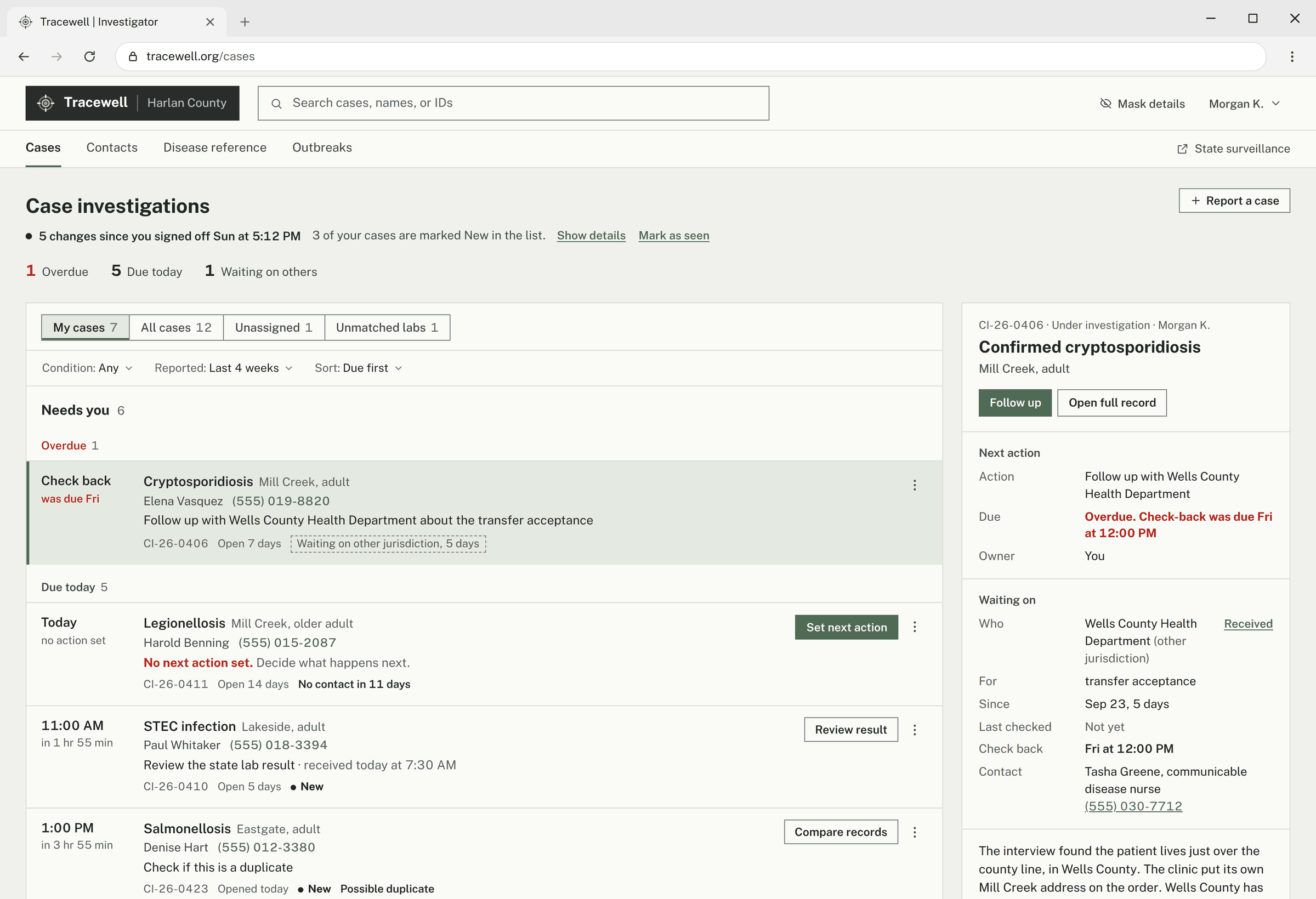
- 01
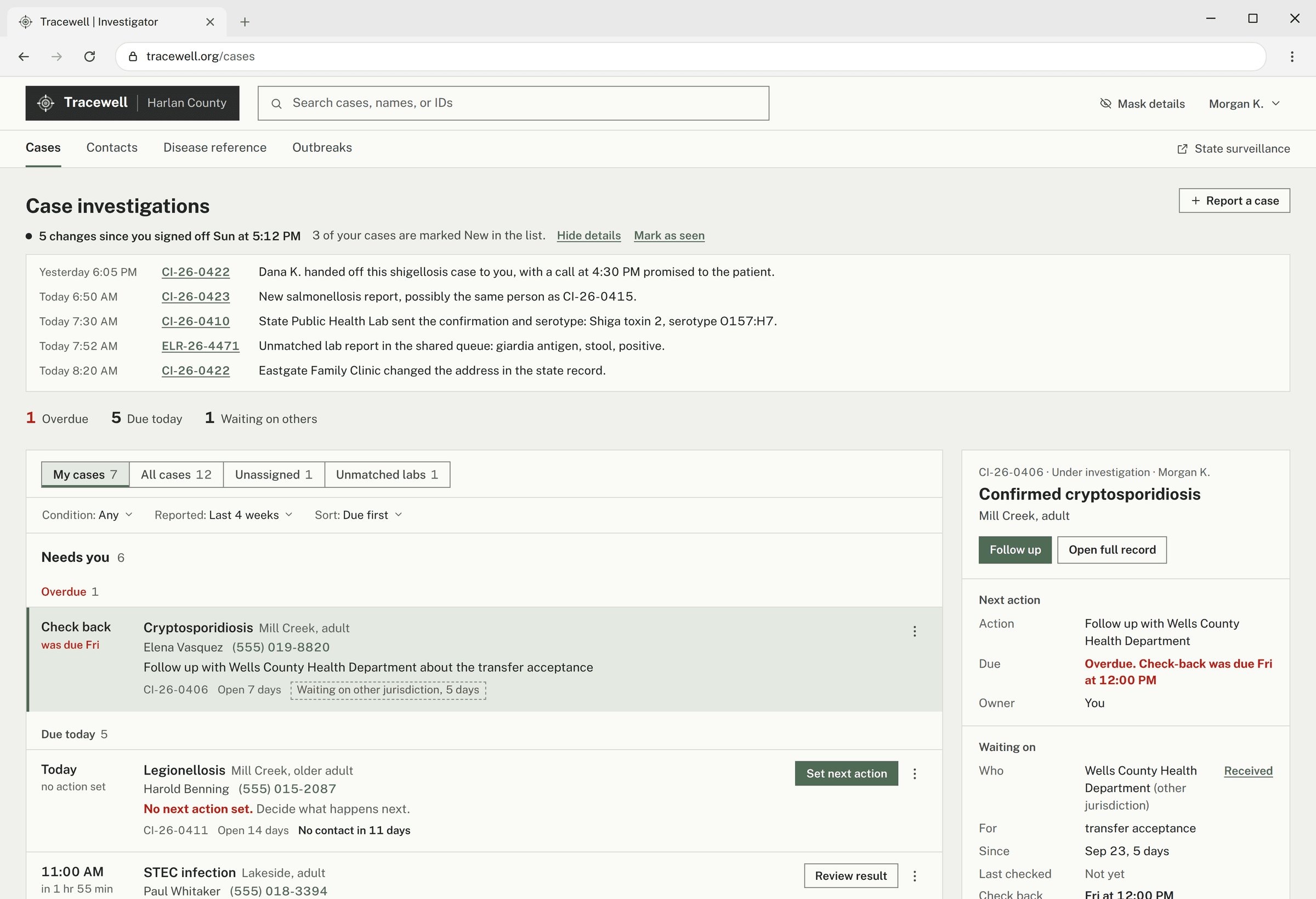
My cases
The day starts in one place.
- Every change since sign-off in one list: handoffs, new reports, lab results
- Overdue, due today, and waiting on others, counted up top
- Every case shows its status, next action, and how long it’s been open
- A case with no next action says so on its row, with Set next action right there
Answers: One place to start the day
- 02
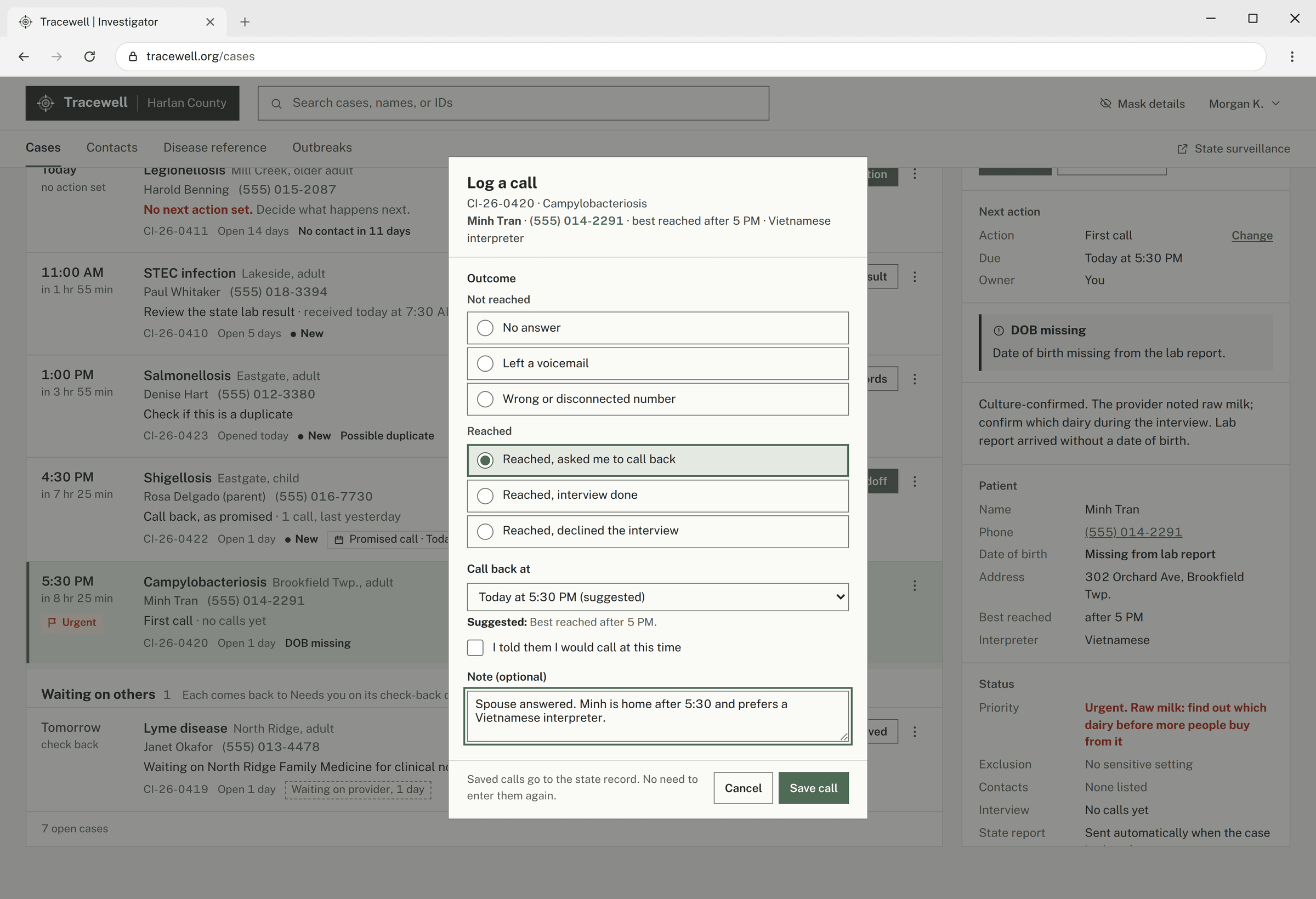
Log a call
A promise to a patient, on the record.
- Outcomes split into not reached and reached
- A call-back time suggested from when the patient is best reached
- “I told them I would call at this time” turns a call-back into a promise the case keeps
- Saved calls go to the state record, so nothing is entered twice
Answers: Promises to patients the system knows about
- 03
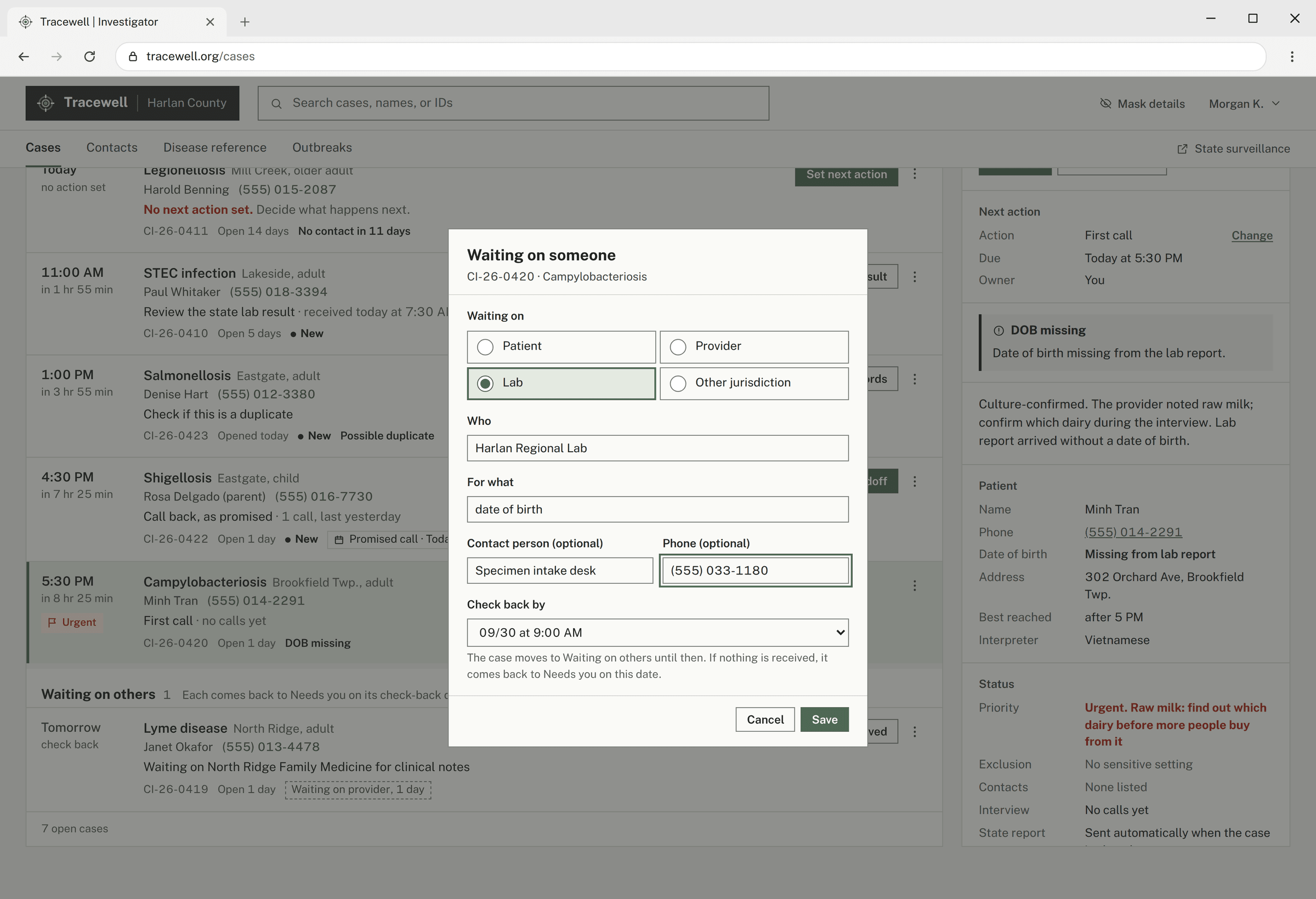
Waiting on someone
Waiting, as a real status.
- Waiting on the patient, a provider, a lab, or another jurisdiction
- Who, for what, and an optional contact and phone
- A check-back date: the case moves to Waiting on others until then, and comes back to Needs you if nothing arrives
Answers: “Waiting on someone else” as a real status
- 04
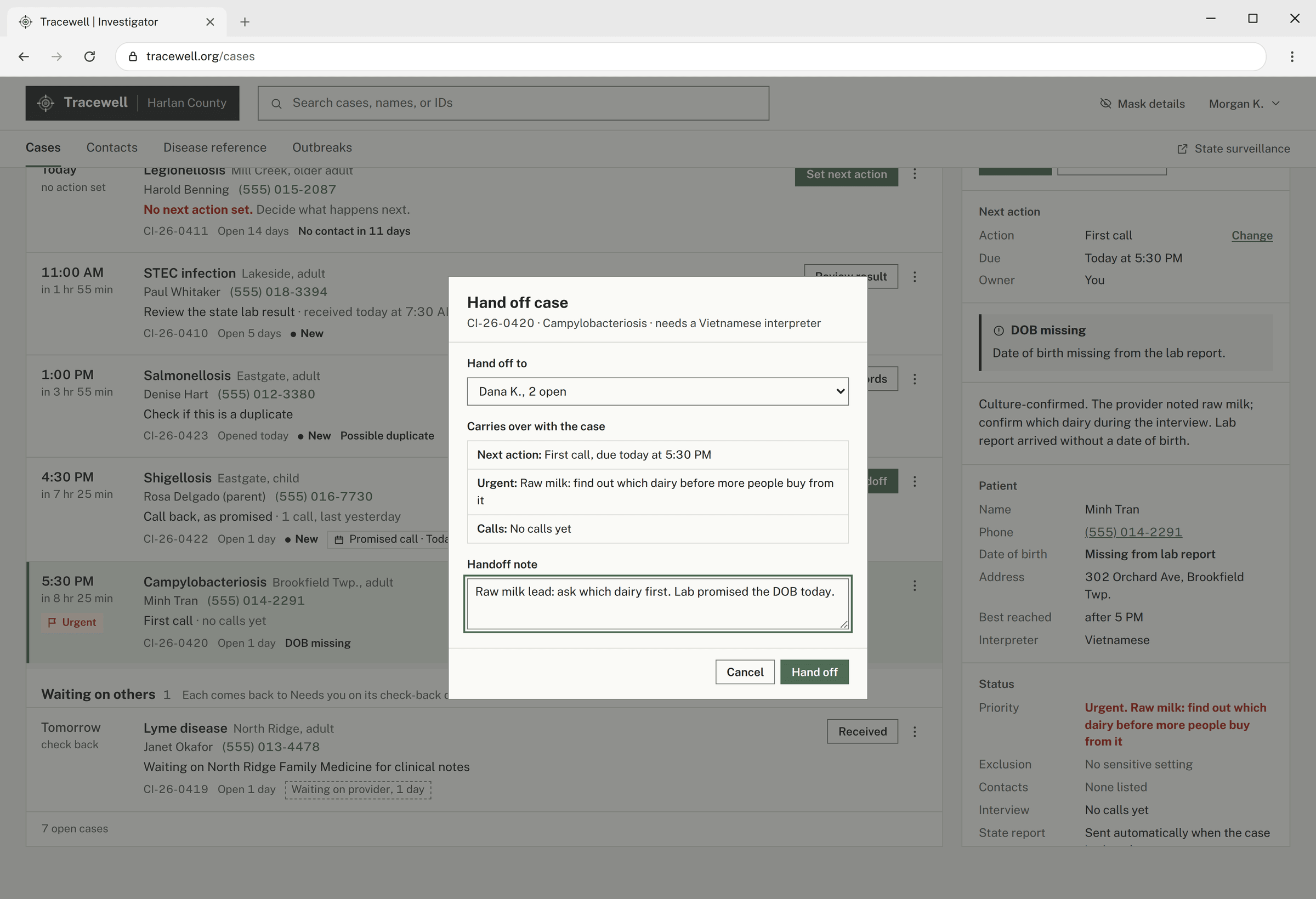
Hand off
Nothing lost between investigators.
- Choose who it goes to, with how many cases they already have open
- The next action, urgent notes, and calls carry over with the case
- A handoff note for anything else
Answers: Handoffs with nothing left ambiguous
Every decision tied back to something an investigator told me.
What the research settled
Investigators don’t forget which cases need follow-up. The record can’t hold it, so they keep a second system for next steps, waits, and promises.
What’s next
Five task-based sessions with investigators. None of this has been tested with them yet.
What I’d track
Time from report to first contact; places checked before the first case (6 to 9 today, aiming for 1); and the share of open cases with a next action, owner, and due date.
Tracewell is a conceptual product. The research behind it is real: findings come from interviews with working disease investigators, anonymized. The persona is a composite, and the case records in the screens are sample data.
Want to hear more?
I’d love to walk through the details.